
What are the latest innovations in CO₂ recovery and reuse technology?
•
What are the latest innovations in CO₂ recovery and reuse technology?
You're running a CO₂ recovery system that's a decade old, and it feels like it. The energy costs are high, it requires constant supervision, and you suspect you're not getting the best efficiency.
The latest innovations focus on efficiency, automation, and new applications. Technologies like Pressure Swing Adsorption (PSA) are reducing energy use, while IoT and digital monitoring allow for remote control and predictive maintenance, making systems smarter and more cost-effective than ever.

I get asked all the time what's new in the world of CO₂ recovery. Engineers like Jacky are always looking for an edge, a way to make their process better, cheaper, or more reliable. The good news is that this field is not standing still. We are constantly integrating new technologies into our systems at FTL Machine. The core principles of compression and purification remain, but how we achieve them is becoming much more sophisticated. Let’s dive into some of the most impactful changes I'm seeing and implementing right now.
How has PSA (Pressure Swing Adsorption) technology improved CO₂ recovery efficiency?
Traditional CO₂ purification methods often rely on energy-intensive cryogenic liquefaction or chemical solvents. These systems get the job done, but they can be expensive to run and maintain.
PSA technology offers a highly efficient, non-cryogenic alternative for purifying CO₂. It uses specialized adsorbent materials that capture CO₂ molecules under pressure and release them under a vacuum, consuming significantly less energy than traditional methods for specific gas streams.
 System for CO₂")
I find PSA fascinating because it's a more elegant way to separate gases. Instead of just brute-force cooling and phase changes, it uses material science. Imagine a sponge with microscopic pores that are the perfect size and shape to trap CO₂ molecules while letting other gases like nitrogen pass right through. That's the adsorbent material, often a zeolite or metal-organic framework (MOF).
Our PSA units work in a cycle. We feed the mixed gas stream into one vessel under high pressure, and the adsorbent "grabs" the CO₂. The purified waste gas exits. Before the adsorbent is saturated, we switch the flow to a second vessel. Meanwhile, we reduce the pressure in the first vessel. This "pressure swing" causes the adsorbent to release its captured CO₂, giving us a stream of high-purity CO₂. This process is especially effective for upgrading biogas or separating CO₂ from nitrogen. It dramatically cuts down on the energy needed for refrigeration, a huge win for operational expenses.
| Technology | Energy Consumption | Operational Complexity | Maintenance Needs |
|---|---|---|---|
| Cryogenic Distillation | High | High | Moderate |
| Amine Scrubbing (Solvents) | Moderate-High | High (chemical handling) | High |
| Pressure Swing Adsorption (PSA) | Low-Moderate | Low (automated) | Low |
What automation or digital monitoring systems are now used?
You can't have an operator watching a pressure gauge 24/7. In today's lean manufacturing environment, you need systems that can think for themselves and alert you when something is wrong.
Modern CO₂ recovery plants are fully automated with PLC controllers and equipped with IoT sensors. These systems enable real-time remote monitoring, data logging, and predictive maintenance alerts, which can be accessed from a laptop or smartphone, maximizing uptime and efficiency.
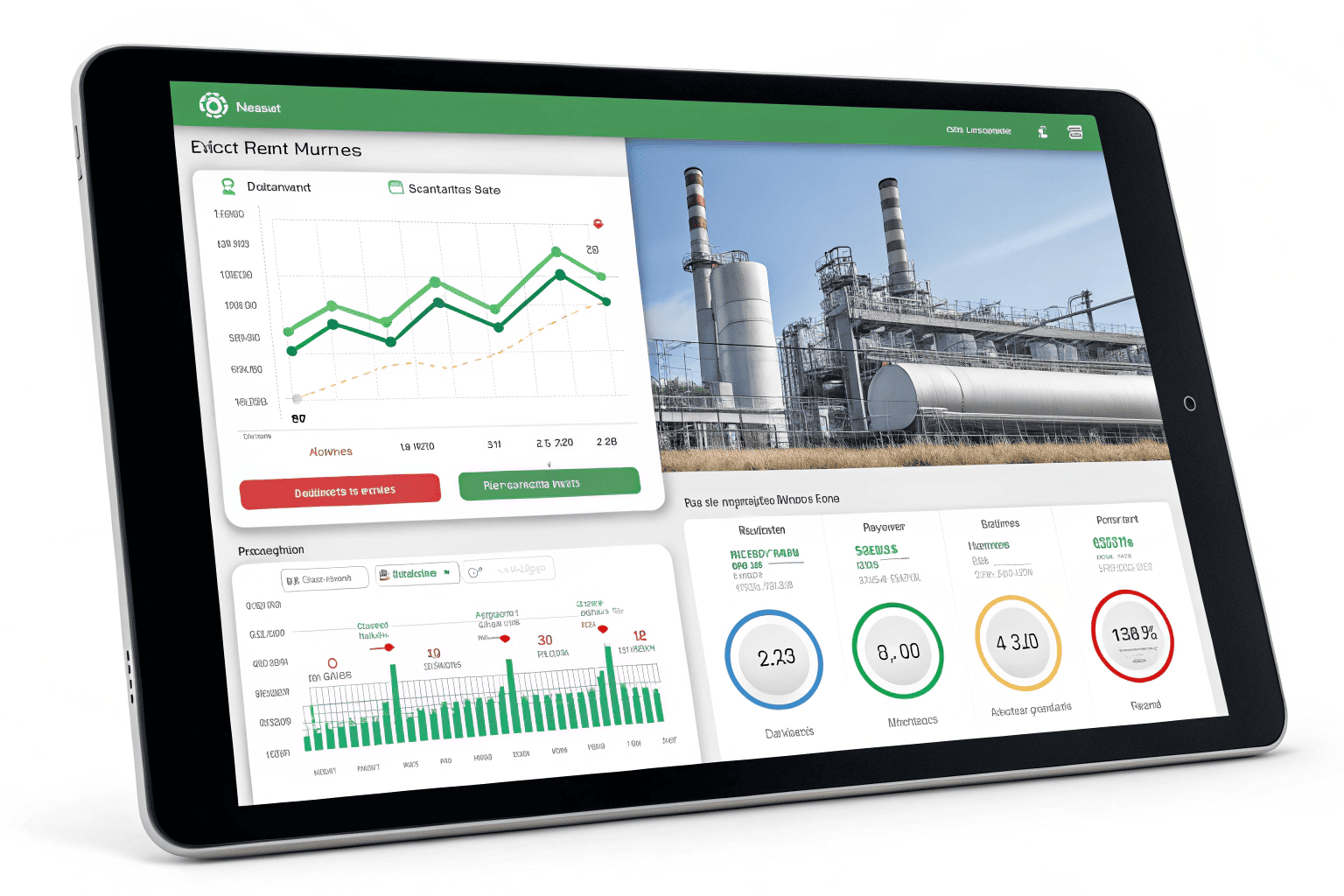
Years ago, running a gas processing plant was a very hands-on job. Today, the systems we build at FTL Machine are fundamentally different. I recently commissioned a plant where the lead engineer was monitoring its startup performance from his office 200 miles away. That's the power of modern automation.
We integrate industrial-grade Programmable Logic Controllers (PLCs) as the brain of the system. This brain receives data from a network of smart sensors—IoT devices that measure pressure, temperature, flow rates, and gas purity in real time. This data is not just displayed on a local screen; it's fed into a cloud-based platform.
Key Digital Features
- Remote Operation: Operators can start, stop, and adjust the system securely from anywhere. This reduces the need for constant on-site supervision.
- Predictive Maintenance: The system's software analyzes trends. For example, if a compressor's vibration signature changes subtly, the system will flag it for inspection weeks before it could fail. This prevents costly unplanned downtime.
- Performance Optimization: By logging and analyzing historical data, we can help clients fine-tune their operation to minimize energy use per ton of CO₂ produced, directly improving their bottom line.
What future trends will shape the CO₂ recovery market?
You've optimized your current process, but you're also thinking about tomorrow. What new opportunities or challenges will CO₂ technology present in the next five to ten years?
The future is focused on Carbon Capture, Utilization, and Storage (CCUS). Key trends include using CO₂ as a feedstock for sustainable fuels and chemicals, mineralizing it in building materials, and integrating with Direct Air Capture (DAC) to create carbon-negative solutions.

We are moving beyond simply capturing CO₂ from industrial sources. The next frontier is about creating a truly circular carbon economy and even cleaning up legacy emissions from the atmosphere itself. As an equipment manufacturer, we are deeply involved in projects that are pushing these boundaries.
One of the most exciting areas is CO₂ as a chemical feedstock. I'm working with startups that are combining our captured CO₂ with green hydrogen to produce synthetic aviation fuel. This is a game-changer for decarbonizing transportation. Another major trend is mineralization. Companies are injecting CO₂ into concrete, where it reacts and turns into a solid mineral, permanently storing the CO₂ and actually making the concrete stronger. Imagine buildings that act as giant carbon sinks.
Finally, there's Direct Air Capture (DAC). While still expensive, the technology to pull CO₂ directly from the ambient air is improving rapidly. This will allow us to go beyond net-zero and actually begin to lower the concentration of CO₂ in the atmosphere. The CO₂ recovery and purification technologies we are perfecting today are the essential foundation for this large-scale DAC deployment in the future.
Conclusion
Innovation is making CO₂ recovery more efficient, intelligent, and versatile. New technologies are transforming this field from a simple cost-saving measure into a cornerstone of the future green industrial economy.
You may also be interested in:
Why is CO₂ recovery technology gaining popularity worldwide?
Why is CO₂ recovery technology gaining popularity worldwide? You see headlines about carbon capture everywhere. But you wonder if it's
Read more
How is a CO₂ recovery system designed to fit different industries?
How is a CO₂ recovery system designed to fit different industries? You're under pressure to implement a CO₂ recovery solution.
Read more
How energy-efficient are today’s CO₂ recovery technologies?
How energy-efficient are today’s CO₂ recovery technologies? You want to recover CO₂, but you fear that high electricity bills will
Read more